Thermal Imaging Inspection
- 24/7 live calls Available
- On our way in 45 minutes or less
- We bill directly to insurance
- Locally owned and operated
Expert Thermal Imaging Inspection Services
Detect hidden problems before they turn into costly repairs with professional infrared imaging technology. Thermal imaging allows property owners to uncover issues that are invisible to the naked eye—without opening walls or causing damage. Whether you own a home or a commercial building, early detection can protect your investment and prevent unexpected expenses.
Why Thermal Imaging Inspection is Essential for Your Property
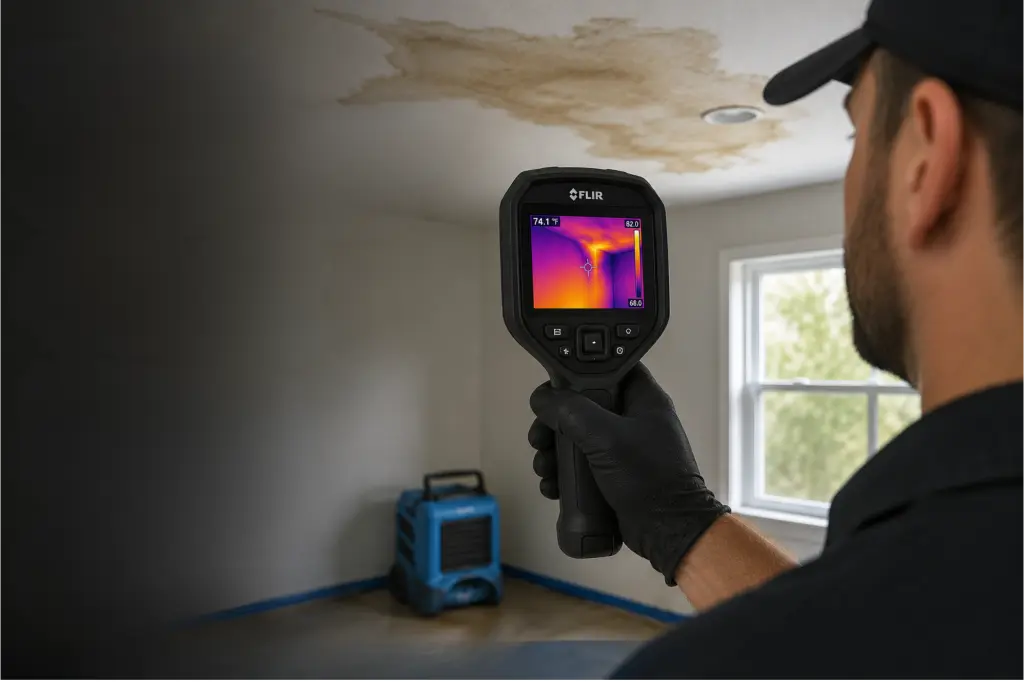
Thermal imaging inspection uses advanced infrared cameras to detect subtle temperature differences on surfaces throughout your property. These variations often indicate hidden concerns such as moisture intrusion, insulation gaps, or electrical overheating. When performed by a trained professional, thermal imaging offers powerful preventative benefits:
- Early Problem Detection: Identify water leaks, electrical hotspots, and insulation defects before visible damage appears.
- Cost Savings: Catch issues early and avoid expensive repairs—studies suggest proactive thermal inspections can reduce maintenance costs by up to 10%.
- Energy Efficiency: Locate air leaks, missing insulation, and heat loss areas that increase monthly utility bills.
- Safety Enhancement: Detect overheating electrical components and hidden moisture that could pose fire or health risks.
A professional thermal imaging inspection helps ensure your property systems operate efficiently while protecting long-term value.
Request a Quote
Call now for 24/7 emergency response or request a free inspection and estimate to begin restoring your property today.
Our Thermal Imaging Inspection Services
Residential Thermal Inspections
We provide comprehensive thermal imaging services for homes of all sizes—from small condos to expansive estates—using state-of-the-art infrared cameras.
- Complete home energy audits to identify heat loss and air infiltration
- Water leak detection in walls, ceilings, and foundation areas
- Electrical system safety inspections for panel boxes and interior wiring
- HVAC efficiency assessments and ductwork leak detection
Our residential inspections are designed to help homeowners improve comfort, reduce energy costs, and detect hidden damage before it worsens.
Commercial Building Thermal Assessments
Make informed decisions about your commercial property with detailed infrared inspections for office buildings, warehouses, and industrial facilities.
- Large-scale facility inspections for equipment monitoring and preventive maintenance
- Building envelope assessments to improve overall energy performance
- Electrical system evaluations to prevent downtime and costly failures
- Roof membrane integrity inspections to detect moisture intrusion
Our commercial thermal imaging services support proactive maintenance planning and operational efficiency.
Top 10 Issues We Detect with Thermal Imaging
Thermal imaging technology allows us to identify a wide range of hidden problems, including:
- Water Leaks: Moisture behind walls and ceilings that can lead to structural damage
- Missing Insulation: Gaps in attic or wall insulation causing energy loss
- Electrical Hotspots: Overloaded circuits and loose connections that increase fire risk
- HVAC Ductwork Leaks: Air loss in heating and cooling systems reducing efficiency
- Air Infiltration: Drafts around windows, doors, and other building penetrations
- Roof Leaks: Wet insulation and roofing membrane defects
- Radiant Floor Problems: Malfunctioning heated floors or pipe breaks beneath concrete
- Thermal Bridging: Heat transfer through structural materials lowering insulation performance
- Plumbing Leaks: Hidden pipe leaks inside walls or under slabs
- Energy Inefficiencies: Overall building envelope performance issues contributing to heat loss
Our Thermal Imaging Inspection Process
Step 1: Pre-Inspection Assessment
We begin by reviewing your property details and discussing any specific concerns. This allows us to focus our thermal imaging cameras on the most critical areas. Our inspector calibrates all equipment and ensures optimal environmental conditions for accurate readings.
Step 2: Systematic Thermal Scanning
Our certified inspector performs a detailed infrared scan using professional-grade thermal cameras. We methodically evaluate walls, ceilings, floors, electrical systems, and mechanical components, documenting all thermal anomalies with high-resolution images and precise temperature data.
Step 3: Data Analysis and Verification
Not all temperature variations indicate a problem. We carefully analyze each image to distinguish legitimate concerns from environmental influences. When necessary, we use supplementary tools—such as moisture meters—to verify findings and determine the appropriate next steps.
Step 4: Comprehensive Reporting
You receive a detailed inspection report that includes thermal images, temperature readings, and prioritized recommendations. We also provide follow-up consultations to help you fully understand the findings and plan any necessary corrective actions.
Contact Us
Schedule Your Thermal Imaging Inspection Today!
Protect your property investment with professional infrared technology. Our certified inspectors use advanced thermal imaging equipment to identify hidden problems before they escalate into expensive repairs. Contact us today to schedule your comprehensive thermal imaging inspection and gain peace of mind about your property’s condition.
FAQs
How much does a thermal imaging inspection cost?
Residential thermal imaging inspections typically range from $200–$500, depending on property size and scope. Commercial building assessments are priced based on square footage and complexity. In many cases, the inspection cost is quickly offset by preventing just one major repair.
Can thermal imaging see through walls?
Thermal imaging cameras do not see through walls. Instead, they detect surface temperature differences. These heat signatures can reveal hidden problems—such as moisture intrusion, missing insulation, or electrical overheating—behind walls without invasive demolition.
What are the limitations of thermal imaging?
Environmental factors such as wind, direct sunlight, and rain can influence readings. Reflective or glossy surfaces may also create misleading thermal patterns. Experienced inspectors understand these limitations and use proper techniques, timing, and supplemental tools to ensure accurate and reliable results.